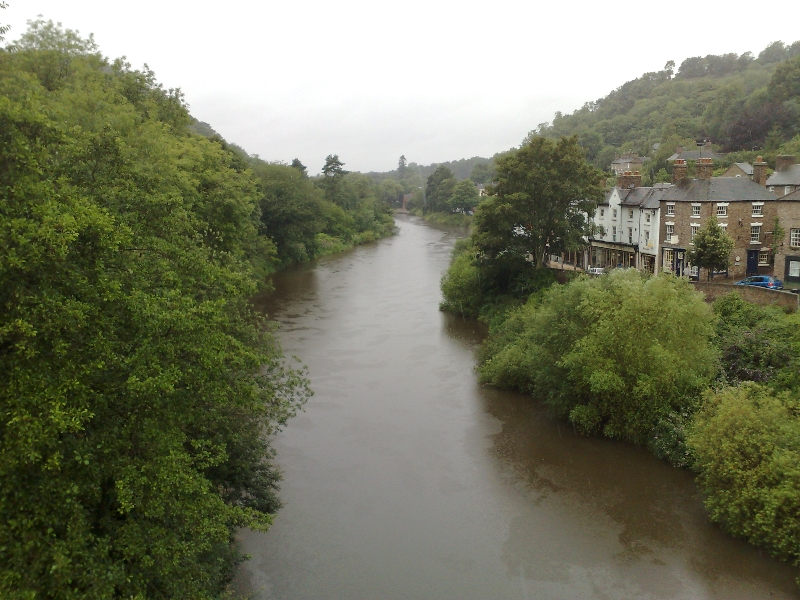
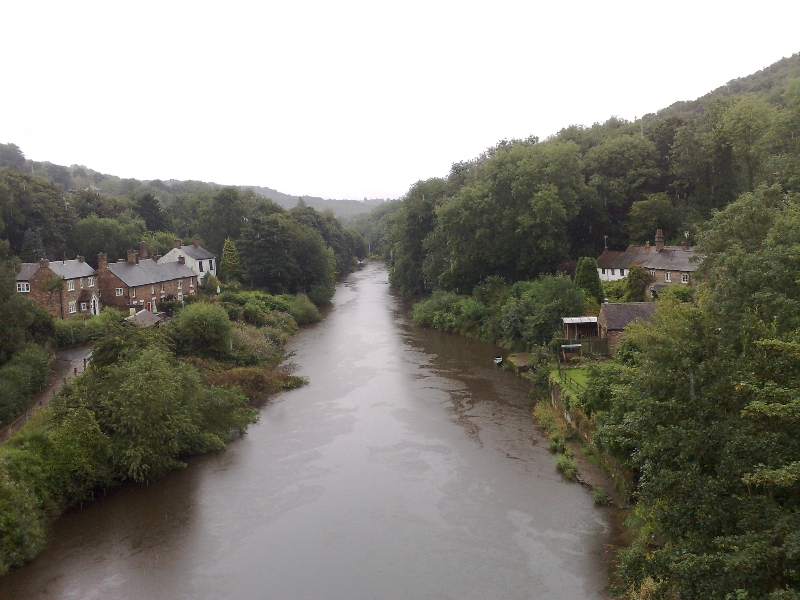
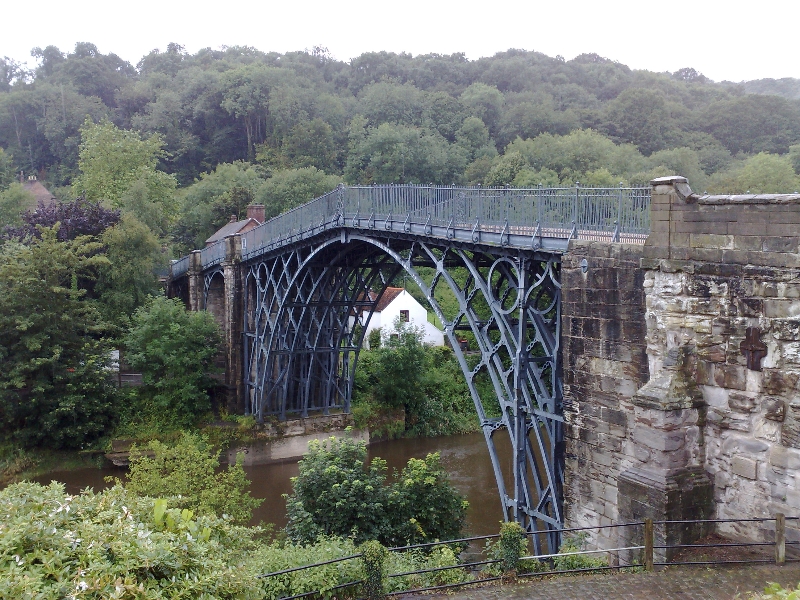
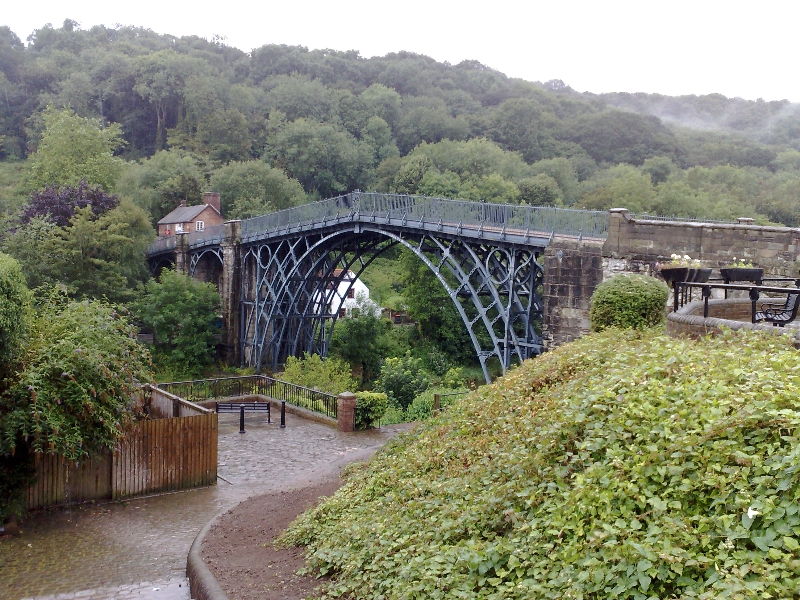
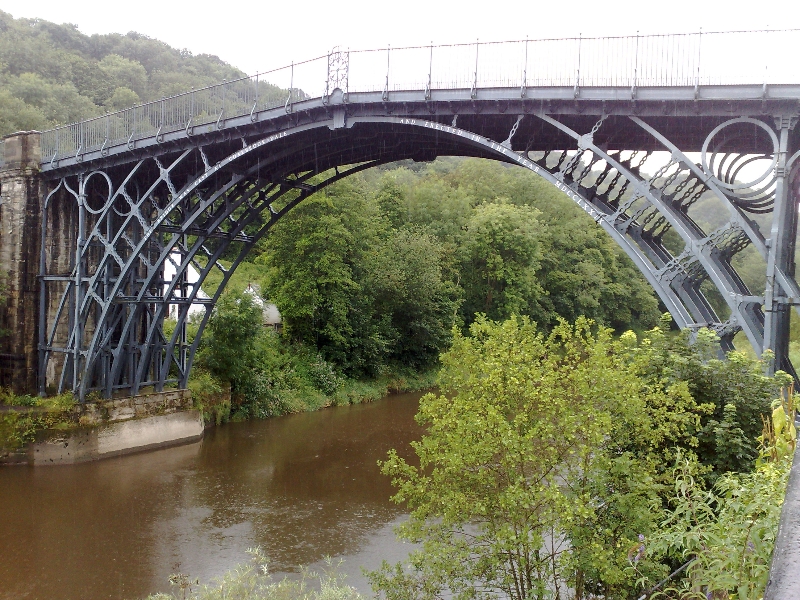
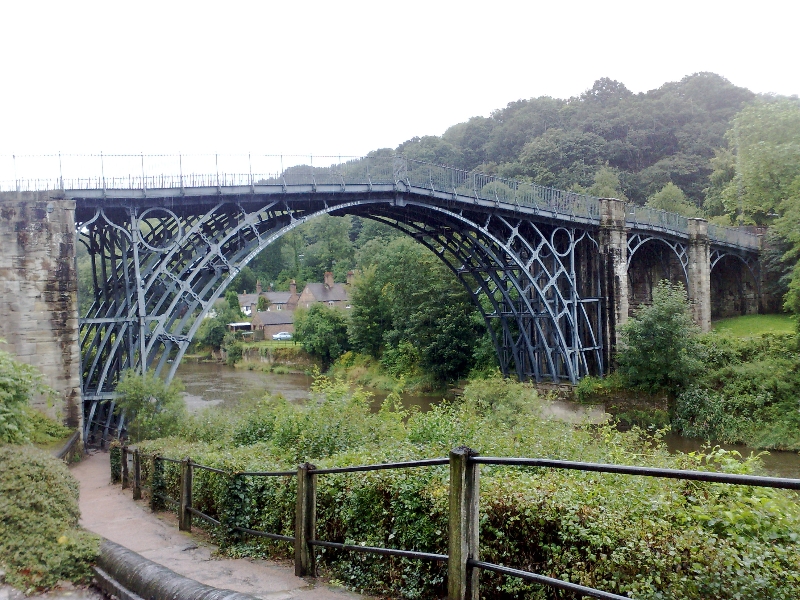
The area around Ironbridge is described by those promoting it as a tourist destination as the “Birthplace of the Industrial Revolution”. This description is based on the idea that Abraham Darby perfected the technique of smelting iron with coke, in Coalbrookdale, allowing much cheaperproduction of iron. Smelting iron by Darby was but one small part of this generalised revolution and was soon superseded by the great iron-smelting areas. However, the bridge – being the first of its kind fabricated from cast iron, and one of the few which have survived to the present day – remains an important symbol representative of the dawn of the industrial age. The grandson of the first Abraham Darby, Abraham Darby III, built the famous bridge – originally designed by Thomas Farnolls Pritchard – to link the two areas. Construction began in 1779 and the bridge opened on New Year’s Day 1781. Soon afterwards the ancient Madeley market was relocated to the new purpose built square and Georgian Butter Cross and the former dispersed settlement of Madeley Wood gained a planned urban focus as Ironbridge, the commercial and administrative centre of the Coalbrookdale coalfield. The Iron Bridge proprietors also built the Tontine Hotel to accommodate visitors to the new Bridge and the industrial sights of the Severn Gorge. On the hillside above the river are situated the stone-built 16th century hunting Lodge at Lincoln Hill, many 17th and 18th century workers cottages, some imposing Georgian houses built by ironmasters and mine and canal barge owners, and many early Victorian villas built from the various coloured bricks and tiles of the locality. St Luke’s Church (1837) in simple Commissioners’ Gothic by Samuel Smith of Madeley, has stained glass by David Evans of Shrewsbury. The living was endowed as a rectory when the parish was created from Madeley in 1847 and is now a united with Coalbrookdale and Little Wenlock, in the Diocese of Hereford. The former Iron Bridge and Broseley railway station, on the Severn Valley line (GWR) from Hartlebury to Shrewsbury, was situated on the south side of the Iron Bridge until 1966.
Related